How OSINT Tools Multiply Investigative Capability: From Data Collection to Decision Advantage
Jane van Tienen | Nov 18, 2026 | 13 MIN READ
Jane is Chief Intelligence Officer at OSINT Combine, where she works at the intersection of intelligence tradecraft, emerging technology, and strategy. A former Senior Executive Service officer in the Australian Government, she brings more than two decades of global intelligence experience. Jane specializes in helping leaders and analysts navigate complex information environments and make better decisions under pressure.
Open-source intelligence (OSINT) practitioners face a persistent challenge: the volume of available information continues to grow, but the time available to investigate, assess and report often does not.
Information is scattered across websites, social media platforms, commercial databases, corporate records and less accessible online environments. Finding relevant information is only part of the task. Analysts must also establish its reliability, identify meaningful relationships, recognize information gaps and determine what the evidence means for the decisions they support.
All of this takes time, often in environments where intelligence requirements are evolving and decision-makers need answers quickly.
This is where OSINT tools can act as a force multiplier. By reducing repetitive collection tasks, assisting in prioritization, connecting disparate information and supporting continuous monitoring, well-designed technology can extend investigative capacity without a proportional increase in resources. That said, the real advantage isn’t simply faster access to more data. Rather, the benefit lies in giving analysts more time and better opportunities to turn information into defensible intelligence.
What Makes an OSINT Tool a Force Multiplier?
In intelligence work, a force multiplier is a capability that increases the effectiveness of existing resources. For OSINT practitioners, that means achieving more with the time, skills and information available to them.
Effective OSINT tools, especially consolidated OSINT platforms, can support this in several ways:
- Accelerating discovery: Searching across multiple publicly and commercially available sources without repeatedly switching tools.
- Connecting information: Identifying potential relationships between people, organizations, locations, digital infrastructure and events.
- Supporting deeper investigations: Enabling analysts to pivot from an initial lead into related information, overlay their findings, or pursue new lines of inquiry.
- Enabling persistent monitoring: Detecting changes in relevant sources or emerging indicators over time.
- Reducing operational exposure: Supporting secure research practices, privacy and attribution management.
- Improving analytical efficiency: Using automation and AI-assisted capabilities to surface, organize and prioritize information for further examination.
Integrated platforms such as OSINT Combine’s NexusXplore bring these capabilities together in a single investigative environment, helping analysts move between discovery, collection, analysis, monitoring, and production without continually switching tools or losing investigative context.
But integration alone is not what makes the technology a force multiplier.
Its value depends on whether it helps analysts answer intelligence requirements more effectively while maintaining the security, source integrity, and analytical rigor that professional investigations demand.
The Challenge Isn’t Just in Finding Information
Investigators have long been accustomed to searching for a needle in a haystack. But what happens when the haystack is made entirely of needles?
In today’s information environment, the challenge for many OSINT practitioners is increasingly less about finding information and more about distinguishing what is available from what is genuinely useful. An investigation may require analysts to examine corporate ownership records, identify associated individuals, explore digital infrastructure, assess online activity and monitor developments across multiple locations. Each new finding can generate additional questions, leading analysts into different platforms, datasets and investigative workflows.
This fragmentation creates practical difficulties. Repeated searches consume time, disconnected datasets can obscure relationships, and large volumes of results can make it harder to distinguish meaningful indicators from background noise. Inconsistent collection practices may also introduce risks to operational security and evidence integrity.
Integrated OSINT technology can reduce some of this friction. But removing barriers to collection introduces another challenge: deciding which information deserves attention. The objective of intelligence collection is not to find everything, but to find what matters, establish what it means and understand what remains uncertain. That distinction becomes particularly important when we consider how OSINT supports different investigative missions.
Four Ways OSINT Technology Multiplies Investigative Capability
The value of an OSINT platform becomes clearer when considered against real investigative scenarios. Across intelligence, law enforcement, corporate security and cyber investigations, technology can help practitioners address complex questions while preserving the analytical judgment needed to interpret results.
The following examples illustrate how integrated collection, analysis and monitoring capabilities can support different missions.
1. Network Investigations & Entity Resolution: Connecting People, Organizations and Digital Identities
At the Australian OSINT Symposium 2026 , OSINT Combine’s Alyssa Stenta demonstrated this challenge through a gang-related investigation in New York. Her presentation explored how investigators could move from a single publicly available username to a broader understanding of potential gang associations and relationships.
The process began with identifying where the username appeared across different platforms. Variations of the identifier, reused profile images, linked accounts and recurring patterns of online activity provided additional avenues for investigation.
But finding another matching username was only the beginning. Analysts needed to examine the wider digital footprint: who appeared repeatedly in photographs, which accounts interacted with one another, what links or references were shared, and whether activity patterns suggested meaningful associations.
Even small details, such as recurring emoji combinations or fragments of usernames, could provide useful leads when examined alongside other information.
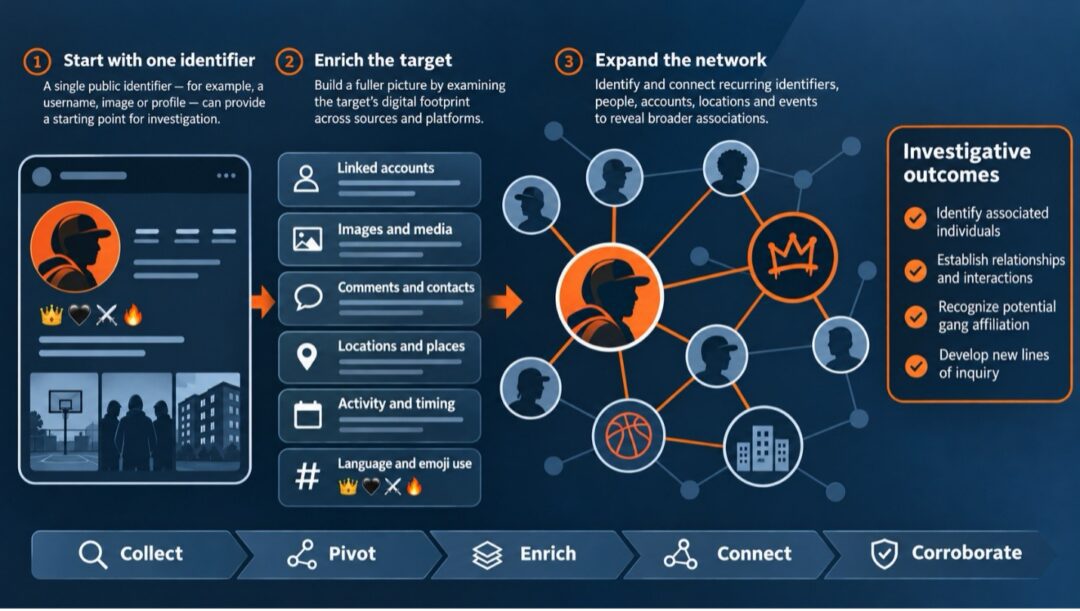
Integrated OSINT platforms can accelerate this work by enabling investigators to pivot between identifiers, explore information across sources, and visualize potential relationships. What might otherwise require numerous disconnected searches becomes a more coherent investigative process.
The important distinction is between discovering a possible connection and establishing what that connection means. A shared username, repeated emoji or social media interaction does not independently prove identity, gang affiliation or criminal association. Each finding must be tested against other evidence and alternative explanations.
The force-multiplying value lies in accelerating the journey from an isolated lead to a broader network picture, while leaving the critical work of corroboration and assessment firmly with the analyst.
2. Event Monitoring: Detecting Change and Emerging Threats
In rapidly evolving environments, intelligence teams need to understand not only what is happening, but what is changing, why it matters and what may happen next.
Geopolitical developments, civil unrest, natural disasters and emerging security threats can evolve quickly. Information that was accurate at the beginning of an event may become outdated as circumstances change.
Effective OSINT monitoring involves more than tracking individual events and requires recognizing emerging patterns, identifying meaningful changes and assessing their potential implications. For example, an intelligence team monitoring civil unrest may need to identify when isolated demonstrations begin spreading to new locations, when planned gatherings escalate into disruption or when emerging activity poses a potential threat to personnel or facilities.
The youth-led protests that began in Créteil, France, in September 2026 provide a contemporary example. What began as a local school blockade expanded into nationwide demonstrations, drawing in broader economic and political grievances. By late October, youth-led protests were taking place elsewhere in Europe, including Germany and Portugal. For intelligence practitioners, the significance lies not simply in the geographic spread of demonstrations, but in recognizing changes in scale, participation and tactics that may alter the threat environment and require a reassessment of public safety or operational risks.
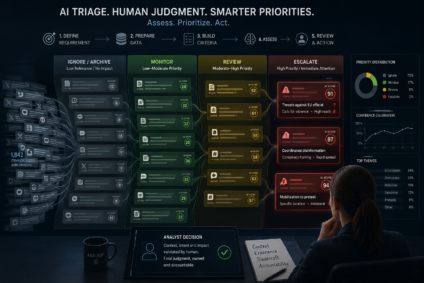
OSINT platforms like NexusXplore, with persistent source monitoring, geospatial research capabilities and automated alerts can help analysts maintain visibility of these developments without relying entirely on repeated manual searches. AI-assisted triage capabilities can further support this process by helping prioritize incoming information against defined intelligence requirements, directing attention towards developments that warrant closer examination.
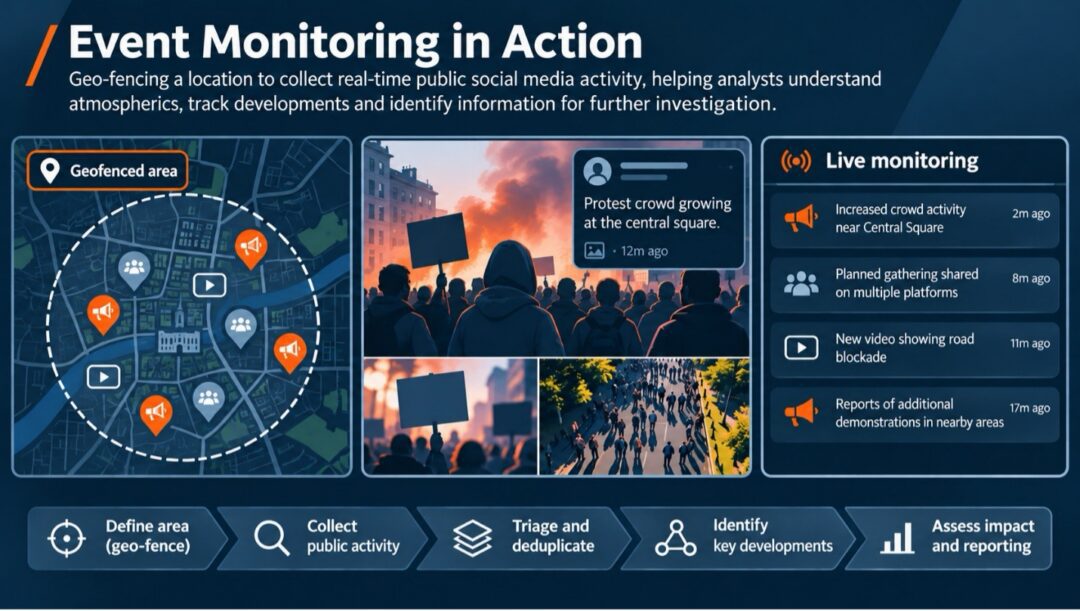
However, more alerts do not necessarily mean better situational awareness. Online information may be duplicated, outdated, geographically inaccurate or deliberately misleading. A sudden increase in online reporting might reflect an escalation in activity, but it could also result from greater media attention or the repeated circulation of the same underlying information.
Analysts must distinguish between indicators and intelligence judgments. A report that demonstrations are spreading is an indicator; determining whether that spread materially changes the risk to personnel or operations requires further assessment.
The force-multiplying value of monitoring technology lies in helping analysts recognize meaningful change, assess its significance and provide timely intelligence to support decisions.
3. Corporate Due Diligence: Identifying Hidden Relationships and Risk Exposure
Understanding who an organization is doing business with increasingly requires looking beyond immediate commercial relationships. Complex ownership structures, subsidiaries, intermediaries and cross-border activities can obscure connections relevant to sanctions compliance, third-party risk, supply chain security and corporate due diligence.
OSINT enables investigators to examine these relationships using corporate records, beneficial ownership information, trade data, sanctions lists and other publicly and commercially available sources.
The 2025–2026 Nexperia case illustrates how corporate ownership, governance and geopolitical considerations can create risks extending well beyond a company’s immediate commercial relationships. The Dutch semiconductor manufacturer’s Chinese ownership, subsequent governance interventions and disruptions to international supply chains demonstrate why understanding beneficial ownership, control and cross-border dependencies matters to both corporate due diligence and economic security.
For intelligence practitioners, the lesson is that identifying who owns an organization is only the beginning. Understanding who exercises control, how commercial relationships intersect with geopolitical interests and where critical dependencies exist is equally important.
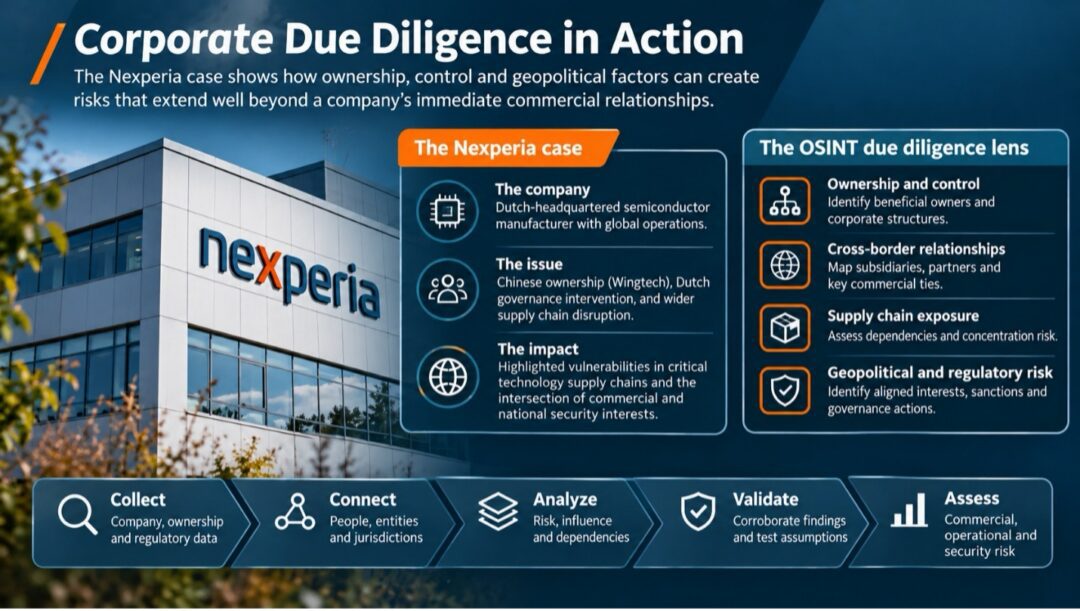
Consolidated OSINT platforms can make these complex investigations more efficient by bringing together disparate datasets and enabling analysts to explore relationships across entities and jurisdictions. This is particularly valuable when ownership or commercial structures involve multiple layers of companies, intermediaries or geographically dispersed activities.
Of course, an association does not automatically establish wrongdoing or unacceptable risk. Complex corporate structures may have legitimate commercial explanations, while incomplete records can create misleading impressions of ownership or control. Analysts must assess the nature and significance of identified connections, corroborate relevant findings and distinguish established risks from potential exposure.
The value of technology is in helping investigators navigate complexity more efficiently, giving organizations a stronger evidentiary basis for decisions about commercial relationships, compliance and risk.
4. Cyber Threat Investigations: Identifying Digital Exposure and Malicious Activity
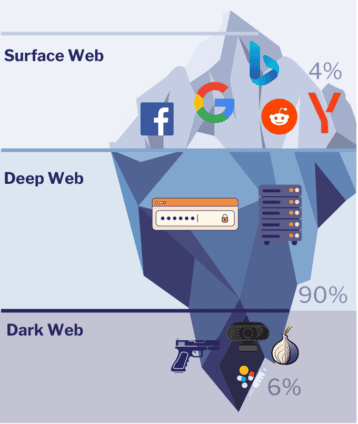
Cyber threats extend well beyond an organization’s own networks. Compromised credentials, exposed data, malicious infrastructure and threat actor activity can leave indicators across the surface, deep and dark web, often outside the visibility of conventional security monitoring tools.
OSINT can help investigators examine this external threat environment, identify potential exposures and develop a more complete understanding of the actors, infrastructure and activities that may pose a risk.
For example, a cyber intelligence analyst investigating a suspected compromise may need to determine whether organizational credentials have appeared in breach datasets, identify associated domains or infrastructure, and examine online activity that could indicate further targeting or exploitation.
Services such as Have I Been Pwned can help establish whether an email address has appeared in known data breaches. This may provide an initial indicator of potential exposure, but a broader investigation requires correlating information across multiple sources and assessing associated infrastructure, identities and threat actor activity.
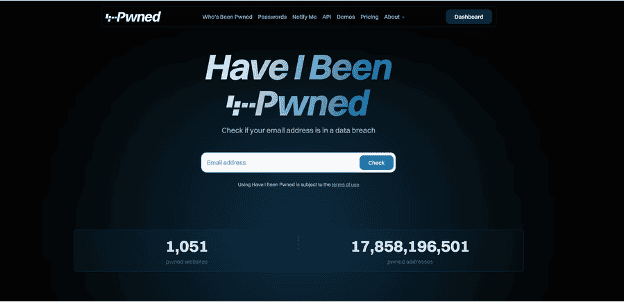
Integrated OSINT platforms can accelerate these investigations by enabling research across disparate online environments, connecting digital identifiers and infrastructure, and supporting ongoing monitoring for emerging indicators. This can help analysts identify potential exposure, prioritize further investigation, and provide relevant intelligence to security and incident response teams.
However, the presence of credentials in a breach dataset does not necessarily establish an active compromise, just as an association with suspicious infrastructure does not independently confirm malicious activity. Findings must be assessed for relevance, recency and reliability, and significant conclusions corroborated before being used to inform security decisions.
By extending visibility beyond an organization’s internal environment, OSINT platforms can help security teams identify potential threats, prioritize investigation and better understand their external digital exposure.
Operational Security: Protecting the Investigation
Across these investigative scenarios, another consideration can be easy to overlook: the analyst’s own exposure.
Every online interaction can leave a digital footprint. IP addresses, browser characteristics, account activity and other technical indicators may reveal information about the researcher or their organization. When investigating sensitive subjects, malicious infrastructure or higher-risk online environments, this exposure can compromise investigative activity, alert a subject to investigative interest or introduce cybersecurity risks.
Operational security (OPSEC) is therefore fundamental to professional OSINT tradecraft.
NexusXplore by OSINT Combine incorporates privacy and attribution-management capabilities designed to reduce analyst exposure during online research. For investigations requiring additional protection, OSINT Combine’s Managed Attribution Virtual Environment (MAVE) provides isolated research workspaces and managed attribution controls.
These capabilities help reduce operational exposure, but technology cannot eliminate it. Analysts must still understand how their research methods and online behavior create risk, and apply safeguards appropriate to the mission.
A genuine force multiplier should help analysts investigate more effectively without compromising the security of the investigation itself.
AI in OSINT: Amplifying Human Intelligence, Not Replacing It
Artificial intelligence introduces another dimension to investigative efficiency. AI-assisted capabilities can help practitioners extract information, classify material, translate content, identify patterns and triage large volumes of data. Used appropriately, these functions can reduce repetitive work and direct analytical attention towards information that may be most relevant to an intelligence requirement.
These opportunities come with important limitations. AI-generated outputs can be persuasive without being accurate. Models may overlook context, introduce bias, misrepresent source material or generate conclusions unsupported by the available evidence. In intelligence work, where apparently credible but incorrect findings may influence consequential decisions, these limitations demand careful consideration.
At OSINT Combine, our approach to AI is pragmatic, purposeful and analyst-first. We believe AI should strengthen analytical tradecraft, not circumvent it. That means understanding where different models and capabilities add genuine value, recognizing their limitations and ensuring consequential findings remain traceable to underlying evidence. Moreover, not every intelligence task requires AI. Sometimes a conventional search, a structured analytical process or an experienced analyst applying established techniques is the more appropriate solution.
The decision to introduce AI should be driven by the investigative requirement and the gravity of the decision context, not simply by the availability of the technology. Through NexusXplore and our practitioner-led OSINT training, we seek to help organizations apply AI thoughtfully and ethically, combining its speed and scale with the contextual understanding, critical thinking and judgment of skilled intelligence professionals.
The objective is not automation for its own sake. It is better intelligence, stronger analytical confidence and greater decision advantage.
Why Technology Alone Is Not Enough
Even the most capable OSINT platform cannot compensate for an unclear intelligence requirement or weak analytical tradecraft. Before collecting information, analysts need to understand the decision being supported, the questions that must be answered and the evidence required to answer them. They must also be able to evaluate source reliability, distinguish facts from inference, challenge assumptions and communicate uncertainty.
Technology can accelerate collection, reveal connections and help identify emerging developments. But the quality of intelligence ultimately depends on how effectively these capabilities are applied. This is why developing enduring OSINT capability requires investment in both technology and people.
At OSINT Combine, our approach brings together investigative technology and practitioner-led training to help organizations develop the skills, workflows and analytical confidence needed to use OSINT effectively. From foundational tradecraft to advanced investigations and the responsible application of AI, effective OSINT training helps practitioners understand not only how to use investigative capabilities, but when to use them, how to interpret the results and where their limitations may lie.
The strongest force multiplier is not technology or expertise in isolation, but the combination of capable analysts, sound tradecraft, and tools designed around the investigative mission.
From More Information to Better Intelligence
The promise of OSINT technology is not that it can collect everything, automate every task or eliminate uncertainty. But that it can help skilled analysts work more effectively in an increasingly complex information environment. The distinction is important. Faster collection does not necessarily mean better intelligence. More connections do not automatically establish meaningful relationships. More alerts do not guarantee earlier warning. And AI-generated outputs, however convincing, are not a substitute for evidence-based judgment.
What makes technology a genuine force multiplier is its ability to reduce investigative friction while preserving the analytical discipline on which good intelligence depends.
At OSINT Combine, this principle informs how we approach technology and training. We believe the greatest decision advantage comes from combining capable analysts, sound tradecraft and tools designed around the realities of OSINT work. Ultimately, the objective is to produce intelligence that informs decisions to help make the world a safer place.
Explore NexusXplore
Discover how NexusXplore brings together data, investigative capabilities and AI-enabled workflows to support intelligence and investigative requirements.
Build the Skills Behind the Technology
Explore OSINT Combine’s practitioner-led training, from foundational OSINT skills to advanced investigations and AI for open-source research.