

Defense Intelligence
Defense intelligence teams operate in complex and evolving threat environments shaped by hostile actors, geopolitical developments and rapidly changing information landscapes. OSINT supports the identification of emerging threats, enhances situational awareness and provides insight into adversary activity and capabilities, enabling more informed decision-making across operational and strategic contexts.


Applying OSINT to Defense Intelligence Operations
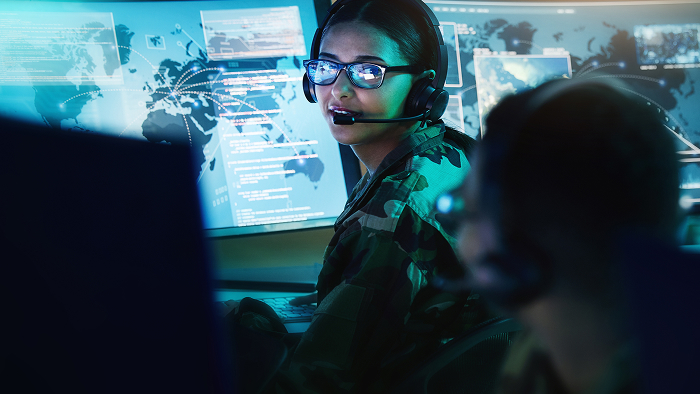
Defense teams rely on timely, defensible intelligence to support a wide range of operational and strategic requirements. OSINT enables continuous visibility of adversary activity, strengthens situational awareness, and provides valuable context for the planning, execution and assessment of military operations.
Adversary Activity and Pattern Analysis
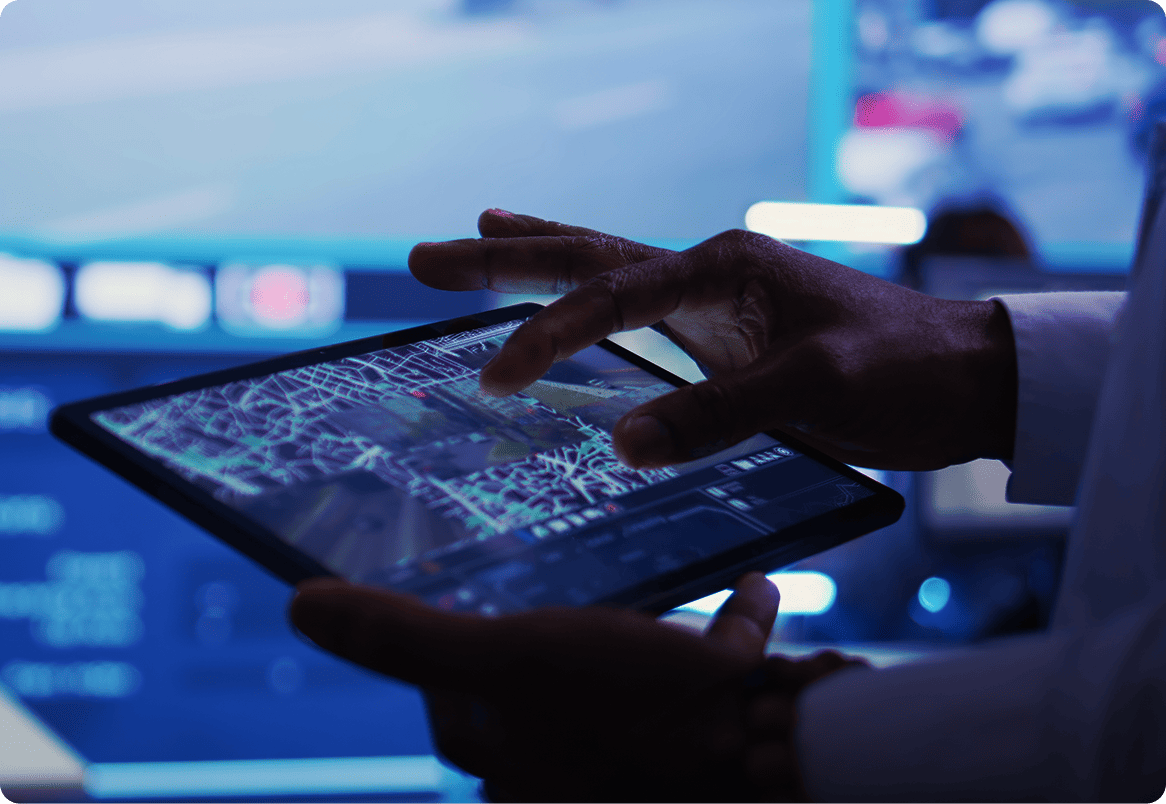
Adversary activity can be understood through patterns in movement, coordination and behavior observed across public information environments. These patterns emerge over time, requiring continuous observation rather than isolated collection.
OSINT enables analysts to track actors, locations, and events, linking indicators such as infrastructure use, equipment presence, communication shifts and changes in operational tempo. By monitoring these signals, analysts can identify persistent activity, detect shifts in behavior and surface emerging areas of interest.
This supports a clearer understanding of how adversaries operate, enabling earlier warning and strengthening preparedness and operational planning.
Force Protection and Operational Awareness
Operational conditions can shift quickly, and even minor developments can have immediate implications for force safety, access and freedom of movement.
OSINT enables analysts to monitor operational environments as they evolve, surfacing indicators such as local unrest, environmental hazards, infrastructure disruption and changes in movement or access. This allows analysts to interpret the operational impact of these developments as they occur.
By maintaining a current understanding of the operating environment, teams can anticipate potential risks and support decisions that protect personnel, assets and mission continuity.
Geospatial and Infrastructure Intelligence
Understanding terrain, infrastructure and the physical environment is fundamental to military planning and operations. Publicly available imagery, mapping data and location-based reporting provide insight into areas that may otherwise be difficult to access, observe or verify directly.
OSINT enables analysts to examine infrastructure, assess routes, and monitor changes to facilities or terrain. This includes identifying construction activity, physical damage, access constraints and changes in how locations are being used.
These insights support route planning, site assessment and a more detailed understanding of operational environments, helping teams plan with greater confidence and adapt to changing conditions.
Capability Development and Military Modernization
Military capability evolves through development, testing, deployment, and adaptation. Tracking these changes provides insight into how capabilities are being built, fielded and refined.
OSINT enables analysts to observe indicators of capability development, including equipment movement, testing activity, procurement signals and infrastructure expansion. Over time, these observations help establish a baseline of activity and highlight deviations that may indicate new or evolving capability.
This allows analysts to assess how capabilities are being developed, integrated and prepared for operational use. In turn, these insights inform strategic decision-making, including how force posture is set, how interoperability is developed and how capability is prioritized and integrated.
Information Environment and Influence Operations
The information environment has always shaped how events are perceived and interpreted. But the speed and scale of information sharing on digital platforms now allow narratives and influence activity to affect behavior and operational outcomes more directly.
OSINT enables analysts to examine how information is created, shared and amplified across public channels. This includes identifying coordinated narratives, tracking sentiment shifts, and detecting misleading or manipulated content, as well as indicators of deliberate influence activity.
Understanding how these dynamics evolve helps decision-makers assess potential impact, challenge false narratives where required and maintain a clearer operating picture.
Building Enduring OSINT Capability
Defense intelligence capability is shaped by operational requirements, mission objectives and the decisions you need to support. The environments you operate in and the pace of change define what your OSINT capability needs to do. Connecting operational needs to capability ensures that how you discover, analyze and act on open-source information aligns with planning, preparation and execution decisions.
OSINT Combine supports this through analyst-focused technology, practitioner-led training and expert insight, enabling teams and organizations to build structured, scalable OSINT capability aligned to mission requirements.

Information Discovery and Analysis at Scale
NexusXplore provides a single environment for discovering, navigating and analyzing publicly available information, combining access to billions of data points with an analyst-first toolkit. This enables teams to spend less time collecting and more time analyzing, moving from discovery to insight more efficiently.

Multi-Source Intelligence Integration
OSINT can be applied as a standalone discipline or integrated with other intelligence sources, strengthening analysis, improving confidence and supporting more informed all-source decision-making. The NexusXplore API enables flexible integration into existing systems, allowing organizations to tailor how data is accessed, combined and applied across workflows.

Secure Operational Environments
Managed attribution and secure research environments, provided through MAVE and NexusXplore, enable teams to conduct sensitive investigative activity in high-risk environments while reducing exposure and maintaining operational integrity.

Training, Tradecraft, and Capability Development
Practitioner-led, tool-agnostic training supports consistent, defensible OSINT tradecraft, helping teams to build capability that can scale, adapt and endure across evolving mission requirements.
FAQs
NexusXplore includes geospatial tools that support area and event monitoring, pattern-of-life analysis and regional assessments—helping teams build situational awareness and understand activity across environments.
OSINT supports mission planning, situational awareness, and intelligence analysis by providing insight into environments, actors and activity across publicly available sources. It helps teams understand context and monitor developments over time.
OSINT can be applied alongside existing systems and workflows, supporting collection, analysis and dissemination processes. With the right tooling and tradecraft, it enhances visibility and supports more informed decision-making.
Yes. OSINT draws from diverse data sources—including geospatial, social, commercial and technical data—providing insight across domains and helping teams build a more complete operational picture.
WORK WITH CONFIDENCE
OSINT Combine brings together analyst-first technology, practitioner-led training and expert enablement to support intelligence and security operations.
Partner with us to strengthen OSINT capability, accelerate insight and support confident, intelligence-led decision-making.